


|
|
|||
 |
|||
| Log In | |||
|
|||
|
|||
|
| |||
|
|||
|
| |||
|
|||
| |||
|
|||
| |||


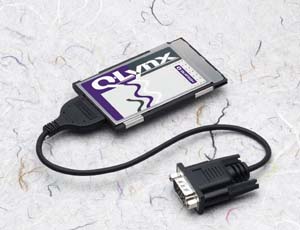
Description Quatech's SSP-100 is a PC-Card 2.1 compliant Type-II PCMCIA card which adds a single asynchronous serial interface to the host computer. The SSP-100 provides a standard RS-232 interface which is implemented with a 16550 UART to provide 16 byte transmit and receive FIFOs for increased performance in multitasking environments and for applications involving high data rates. The SSP-100 will be assigned to the lowest COM port available by default. However, users may select the particular COM port to which the SSP-100 is assigned. In addition, users may specify any interrupt level and any I/O space base address for the SSP-100. All necessary software is included to install and configure the card for use with DOS/Windows 3.x, Windows 95/98,Windows NT 4.0 and OS/2. Support for SCO UNIX System V is available as an option. Suggested Applications
Specifications Bus Interface: PCMCIA Card Standard 2.1
Operating Systems Supported: DOS, Windows 3.1x, Windows 95, OS/2, SCO UNIX System V Do you need an Express Card version of this card? Check out the SSPXP-100 at this link. |
||||||||||||||||||||||||||



 |
 |
|||
|
|
|
 |